

Casa Ferreirinha pioneered the quality revolution of Douro still wines, becoming the region’s first producer dedicated to this style rather than Port. The estate was founded in 1952 by Fernando Nicolau de Almeida, who released the inaugural vintage of Portugal’s most illustrious red wine, ‘Barca-Velha’, that same year. Today, Casa Ferreirinha’s winemaking team is led by Luís Sottomayor, who trained with Nicolau de Almeida and continues his visionary legacy. The house champions quality red, white and rosé wines from across the Douro, with its top references sourced exclusively from the Douro Superior.
The name Casa Ferreirinha is derived from the affectionate nickname of Dona Antónia Adelaide Ferreira, one of the formidable widows of the world of wine who owned and ran Port House Ferreira in the late 1800s. Purchased by Sogrape in 1987, Casa Ferreirinha currently comprises 520 hectares of vineyards in all three Douro subregions: Baixo Corgo, Cima Corgo, and the Douro Superior. The beautiful Quinta da Leda is Casa Ferreirinha’s flagship estate, located close to the border with Spain, in the far east of the Douro Superior.
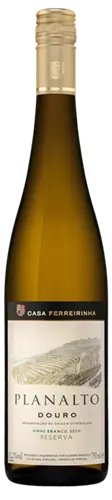
Luís Sottomayor restrains the Douro’s natural exuberance to produce wines that have vibrant freshness, beautiful texture and depth. The care with which he selects the fruit for each wine is especially evident in the quality of the whites. Casa Ferreirinha’s ‘Planalto’, from higher elevation vineyards, is fresh and vibrant. The unoaked ‘Papa Figos’ white, a blend of Rabigato, Viosinho, Gouveio, Arinto and Códega, is crisp and aromatic. Quinta do Sairrão, one of the coolest vineyard sites in the Cima Corgo, planted at 600 metres above sea level, is the source of grapes for Casa Ferreirinha’s ‘Vinha Grande’ white and rosé. The white is partially fermented and aged for six months in new French oak barrels, creating a complex and textured expression with buttery richness from the oak. The ‘Vinha Grande’ rosé, made from 100% Touriga Nacional, boasts bright aromas of red berries with hints of violet and a lively acidity. The estate also makes Extra Virgin Olive Oil from certified organic, ancient olive groves across the Douro Valley in the Cima Corgo and Douro Superior.
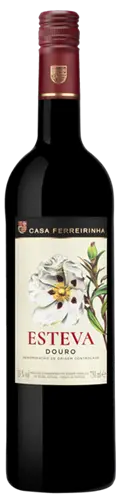
The Casa Ferreirinha reds are all characterised by great depth of flavour. They range from the unoaked, ripe and juicy ‘Esteva’ and ‘Papa Figos’ to the 12-month oak-aged ‘Vinha Grande’. Sourced exclusively from the Douro Superior, ‘Callabriga’ marries intense and concentrated aromas of red and black fruit with subtle spicy hints of tobacco box and cocoa, while ‘Castas Escondidas’, meaning ‘hidden varieties’, is a unique blend of lesser-known grapes grown across the Douro, including Bastardo, Marufo Tinto, Touriga Fêmea and Tinta Francisca. ‘Quinta da Leda’, a blend of Touriga Franca, Touriga Nacional, Tinto Cão, Tinta Roriz and Sousão grown on the eponymous estate, is aged for 18 months in oak barrels, 50% of which are new. It is a wine of great complexity and elegance, with velvety tannins, vibrant acidity and aromas of ripe blackberry and plum, cedary spicy notes and a subtle slate-like minerality.
Two of Portugal’s most fabled wines are the jewels in Casa Ferreirinha’s crown, ‘Reserva Especial’ and ‘Barca-Velha’, grown solely in the Douro Superior. Only produced in outstanding years, Luís Sottomayor is scrupulous in declaring a vintage. The most recent ‘Reserva Especial’ 2014 vintage, only the 18th to be declared since 1960, was awarded 98 points by James Suckling. It is complex and powerful yet still remarkably elegant, with notes of black cherries and blackcurrants, with spicy notes of pepper and tobacco box and menthol.
The Esteva Douro Tinto is a blend of Tinta Roriz, Tinta Barroca, Touriga Franca and Touriga Nacional from vineyards across the Douro Valley, with fruit from higher altitude vineyards, such as Quinta do Sairrão, bringing a refreshing lift to the blend. The soil in the Douro Valley is made up of schist – a dense, slate-like metamorphic rock that fractures vertically, allowing the vine roots to delve deep to access water reserves to sustain them during the hot Douro summers. The poor quality of the soil forces the vines to produce low yields of very concentrated grapes.


Reviews
There are no reviews yet.